The Last Migration ·˚𓆉 ༘₊·
Role: Game Designer, Environment Designer, UX Designer
Medium: UEFN, UE, Figma, Canva
Hours spent: 80
Team members: 4
Project context: INFO 498: Game Design for Social Good
Project link will be added once project is complete!
The Last Migration is a narrative exploration game where players become a green sea turtle, one of the last of its kind, traveling across an ocean altered by climate change to return to its nesting beach. The goal is to lay eggs and continue the species, navigating polluted waters, shifting habitats, and limited resources along the way. Our goal was to raise awareness of the impact of climate change on marine ecosystems through an engaging, emotional, and immersive experience. The project deliverable is a pitch, GDD, and visual of core game loop, with initial environment examples. Additional updates will be provided as development continues. Note: this will be shorter than other project docs, because it is still in development. I will only showcase what I have worked on.
𓆟 Demo Video of My Environment 𓆟
🖌️ My Role – Environment, Game & UX Designer
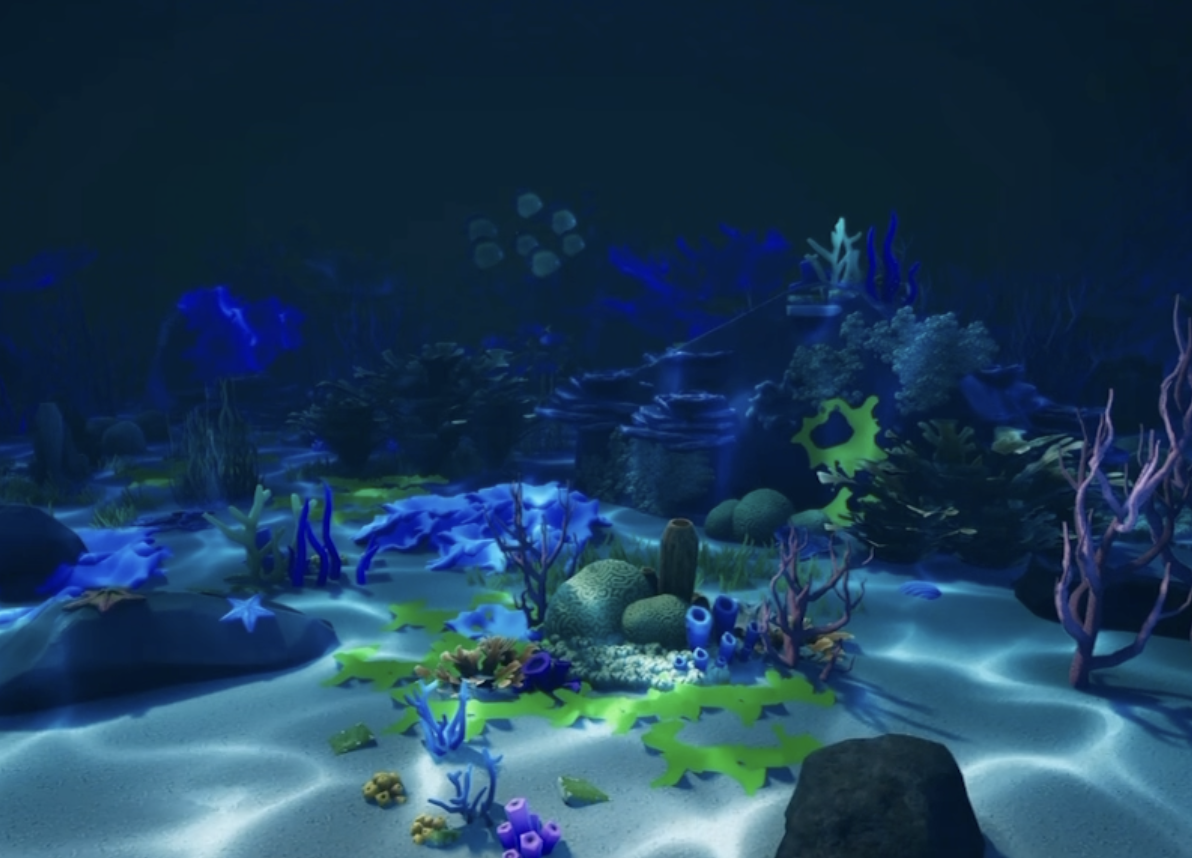
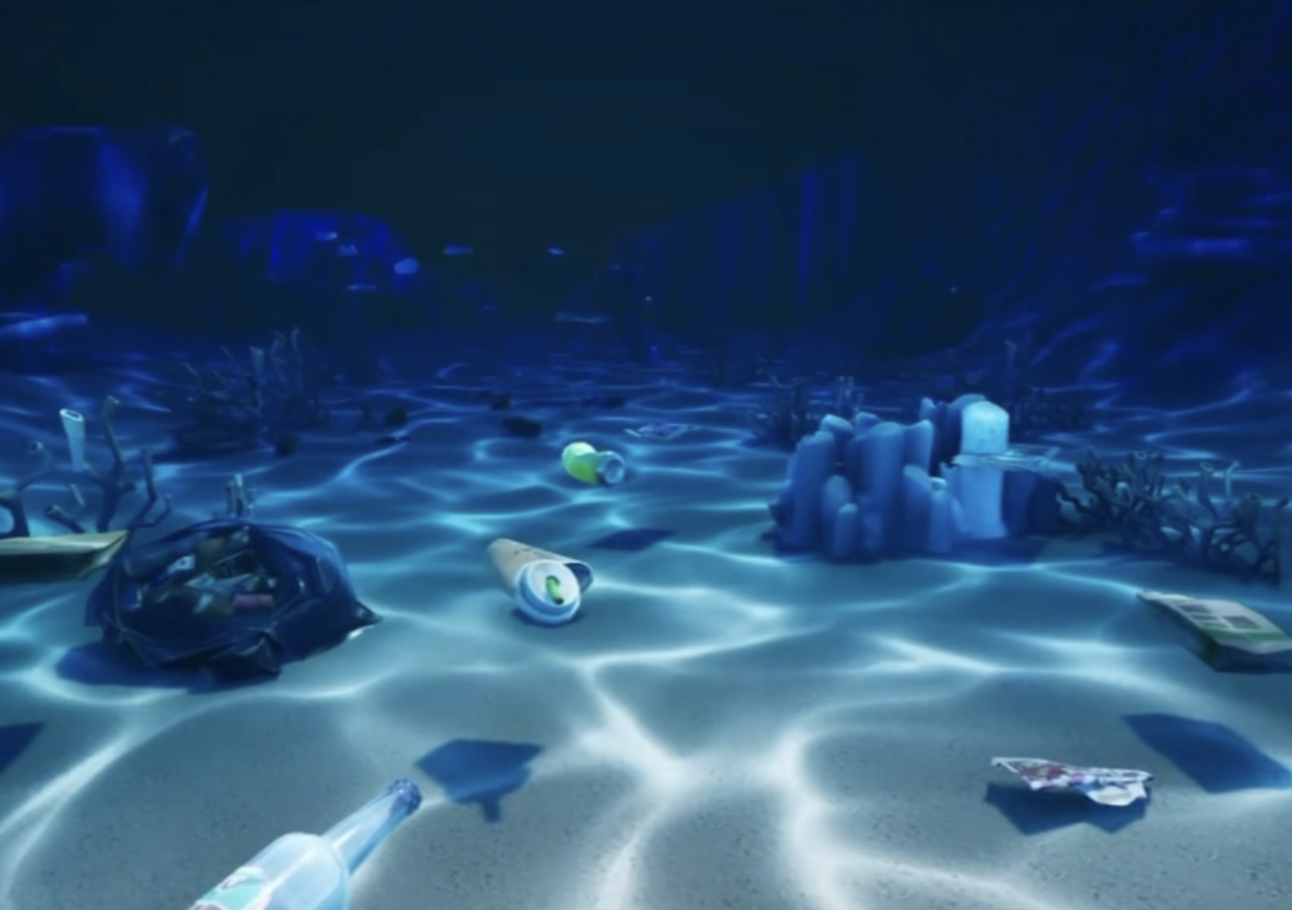
Designed and built a complete underwater environment in UEFN, using native assets and migrated UE coral assets
Created contrasting healthy coral reef and bleached coral reef zones to support narrative and gameplay themes
Authored a 2-page GDD defining core loop, mechanics, and environmental storytelling direction -> LINK
Developed and delivered a preliminary pitch presentation for team submission and class feedback -> LINK
Collaborated on scope refinement and visual direction during the early concept phase
🐟 Social Impact and Purpose
The Last Migration raises awareness of the impacts of climate change on marine ecosystems through an engaging, emotional, and immersive experience. By placing players in the role of a sea turtle struggling to survive in a polluted and warming ocean, the game humanizes climate science and makes its effects personal.
Players gain:
a deeper understanding of humanity’s impact on marine life
an emotional connection to the urgency of survival in a changing world
motivation to reflect, learn, and potentially take action toward ocean conservation
The goal is to transform empathy into passion, entertaining, educating, and inspiring players while grounding the experience in real environmental issues.
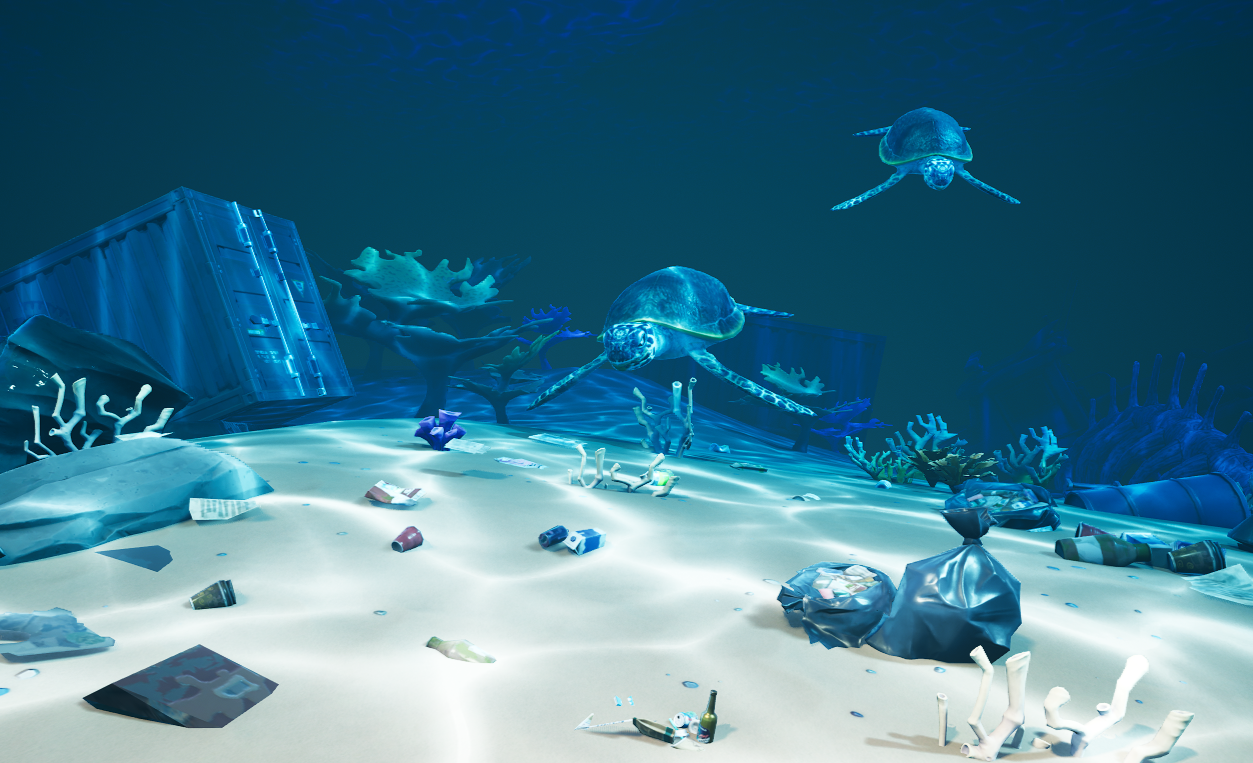
Environment snapshot from the game ^
Turtles imported from UE, environment in UEFN
🛠️ Core Game Loop
Core Game Loop & Mechanics
The player’s journey mirrors the turtle’s life cycle:
Explore → Feed → Avoid Threats → Survive → Migrate → Reproduce
Explore: Navigate diverse underwater environments and areas impacted by climate change.
Feed: Forage for jellyfish, seagrass, and algae to maintain stamina and energy. Scarcity forces strategic decision-making.
Avoid Threats: Evade predators, poachers, and obstacles using stealth, diving, and more.
Survive Tasks: Regulate temperature, navigate storms, interact with other creatures, and more to progress. Each task highlights real-world environmental challenges.
Migrate: Use currents and currents’ momentum to reach new areas while conserving energy.
Reproduce: At the end of all of the levels, reach the nesting beach and lay eggs. It is at this stage that the player will accomplish the goal, but it will pan out and the decimated surrounding environment will highlight the larger, global impact of climate change.
🛠️ Tech Stack
Our workflow combined both 3D and 2D tools to support rapid iteration and visual clarity. We built the game environment in Unreal Editor for Fortnite (UEFN), leveraging its native underwater assets, while also using Unreal Engine to migrate a small set of custom assets into the project. For pre-production, Figma was used to create 2D prototypes, UI explorations, and the core game flow diagram. Finally, Canva supported the creation of our pitch deck and visual presentation materials, allowing us to communicate the concept clearly to instructors and peers.